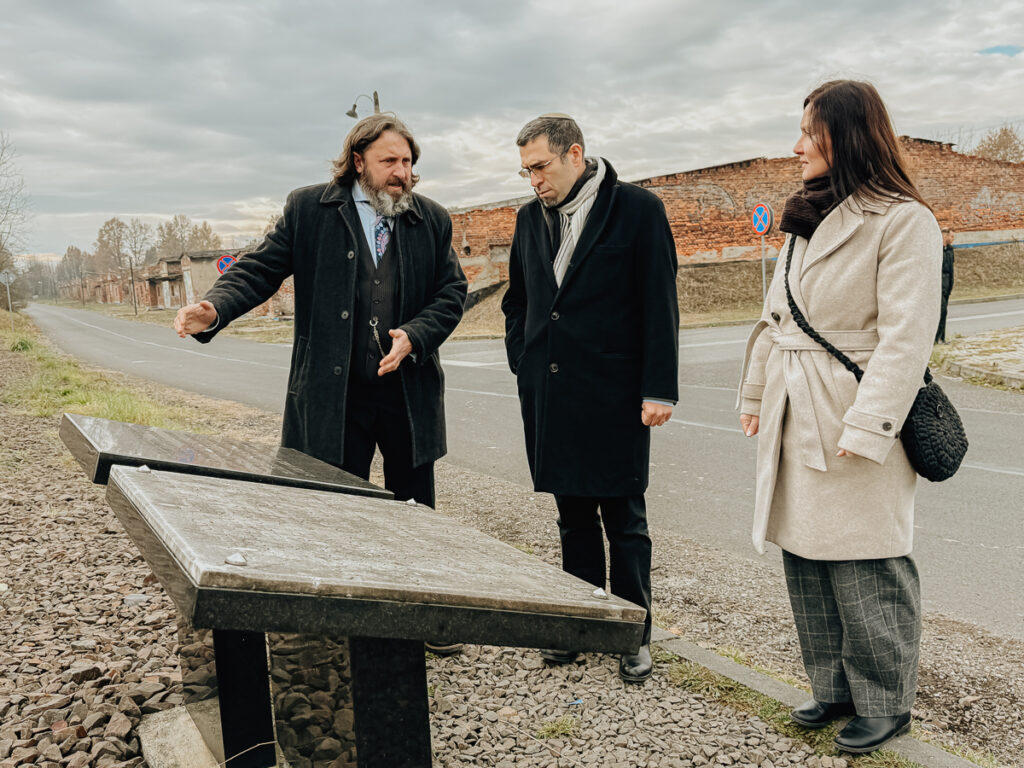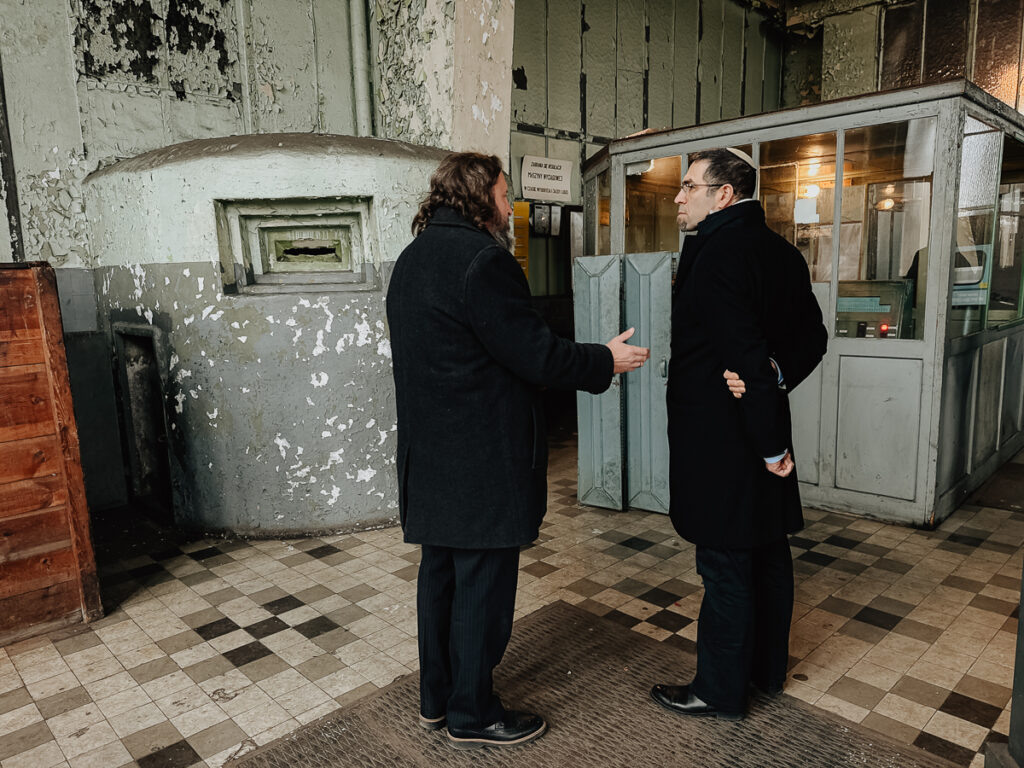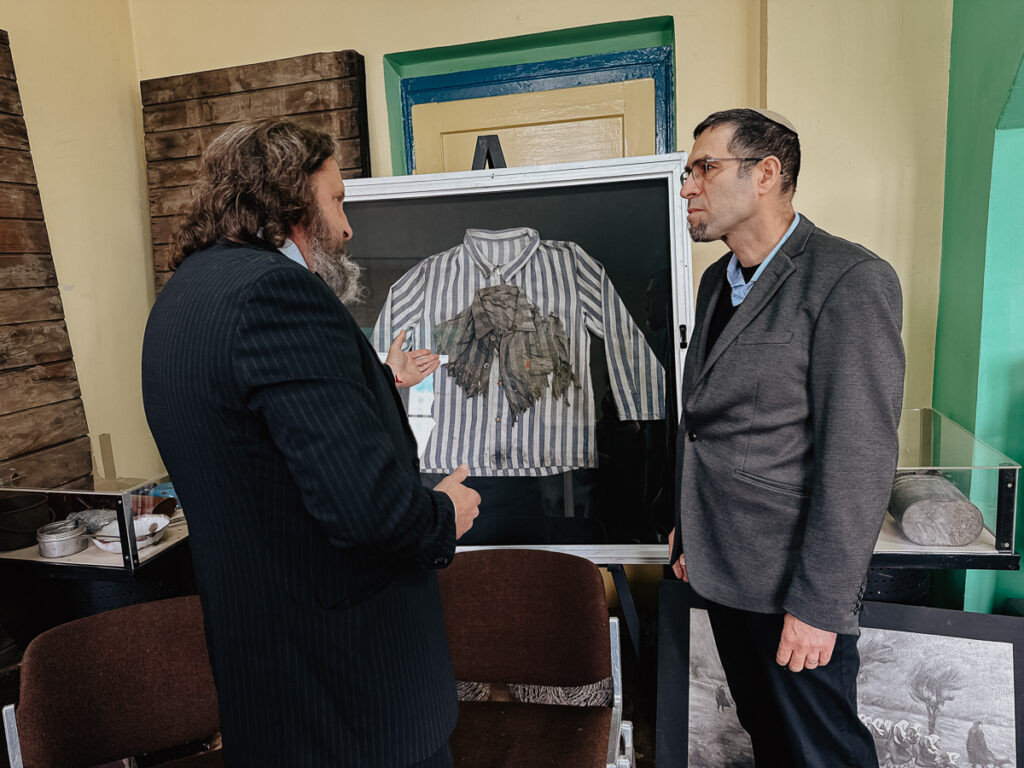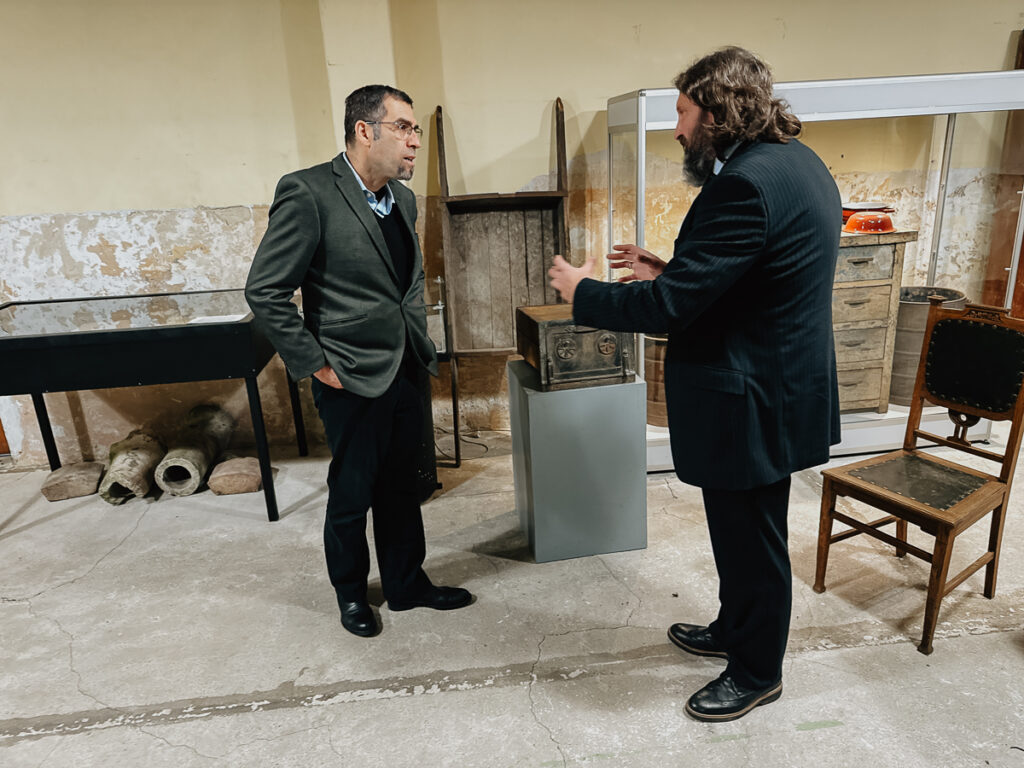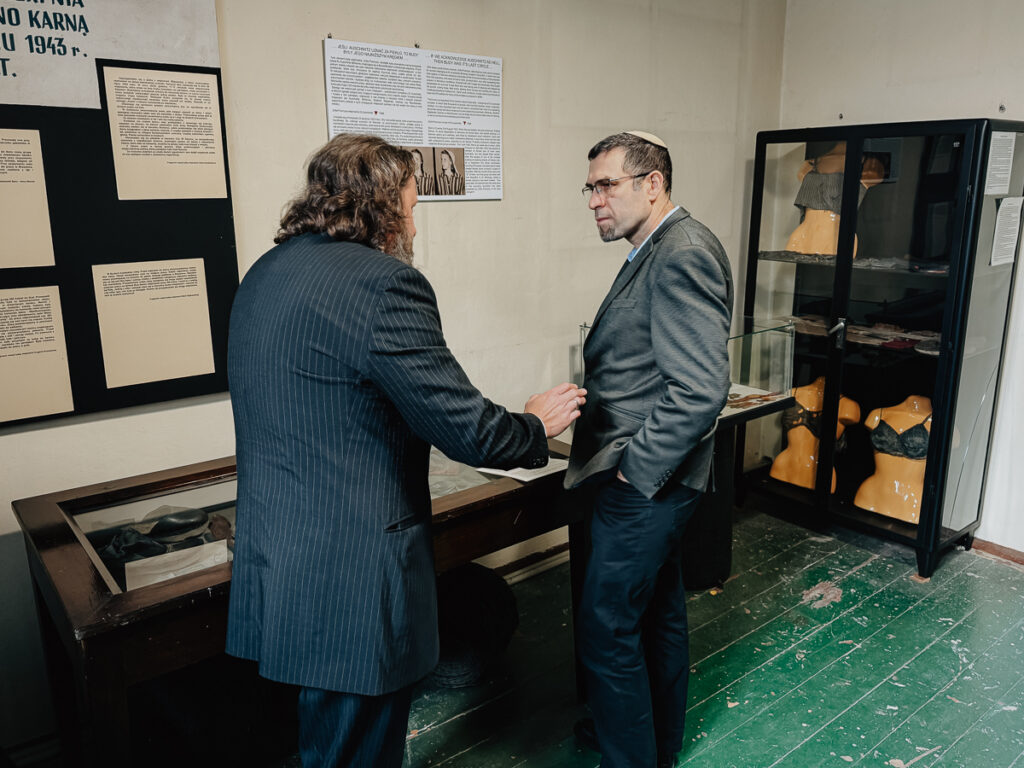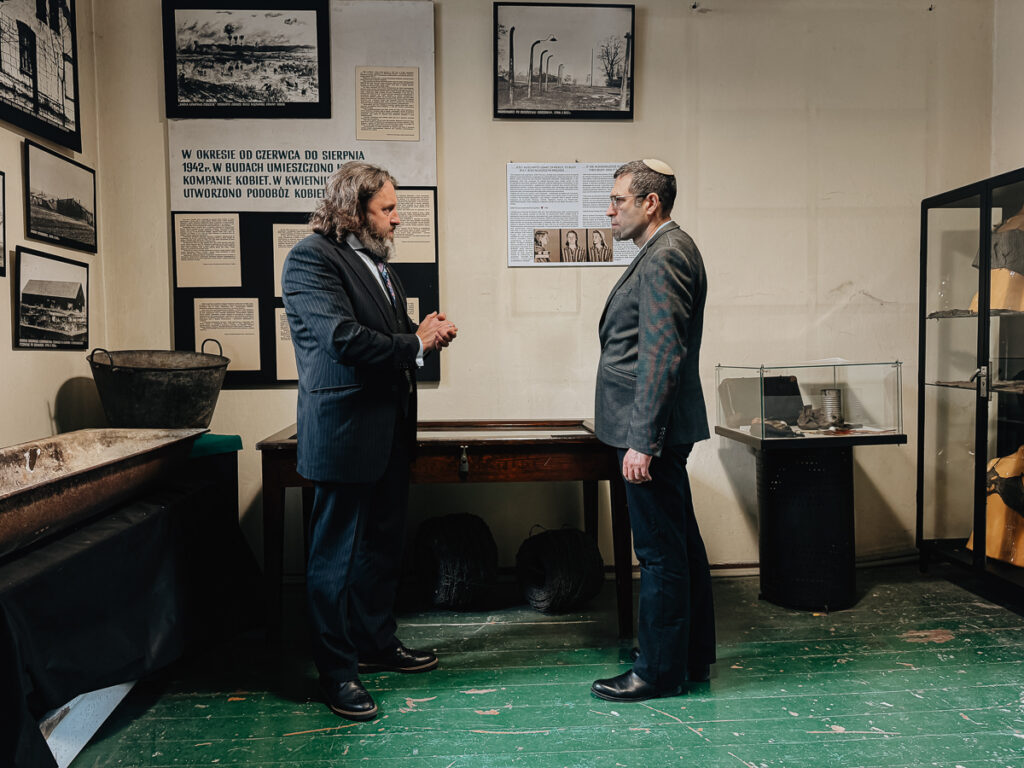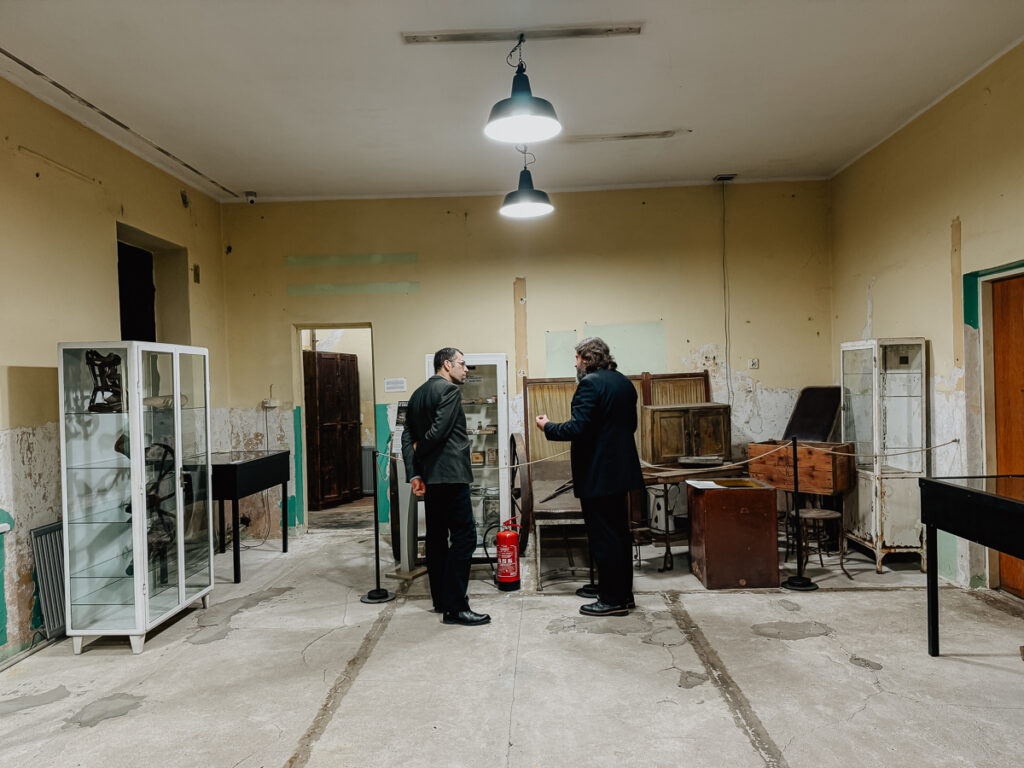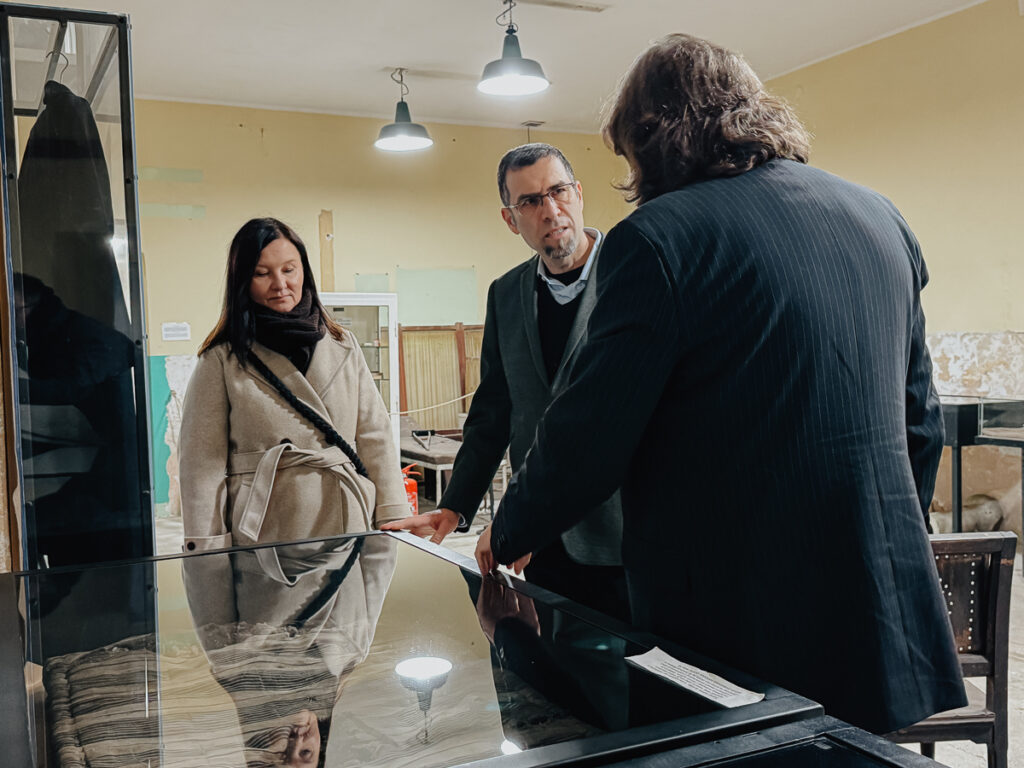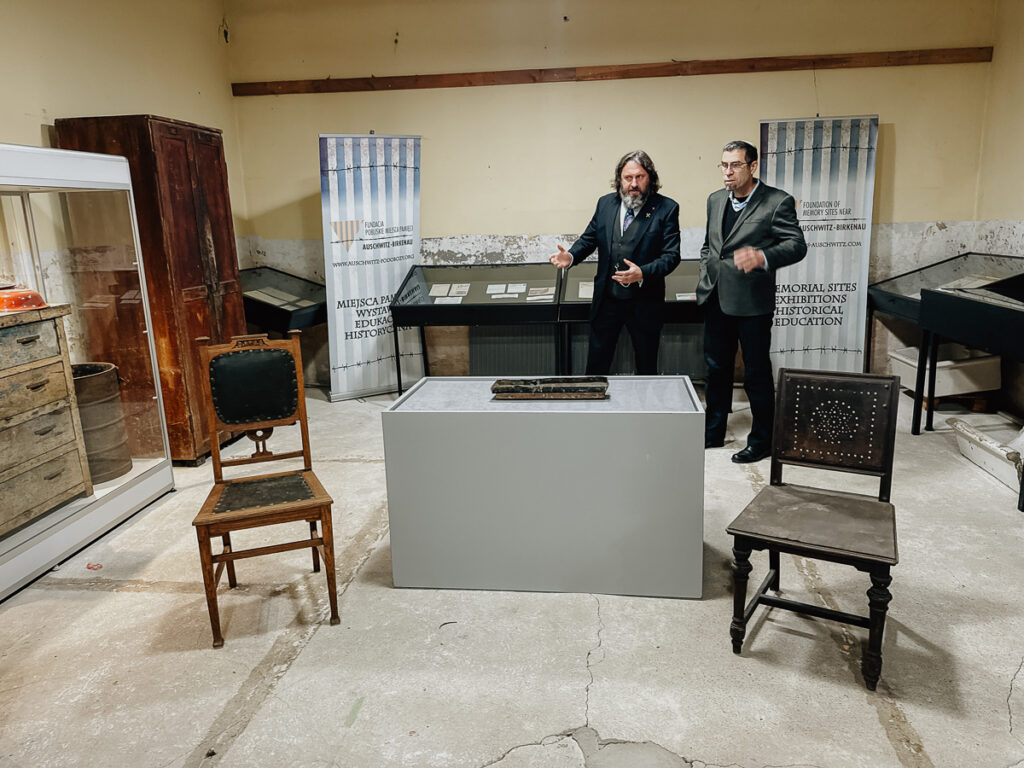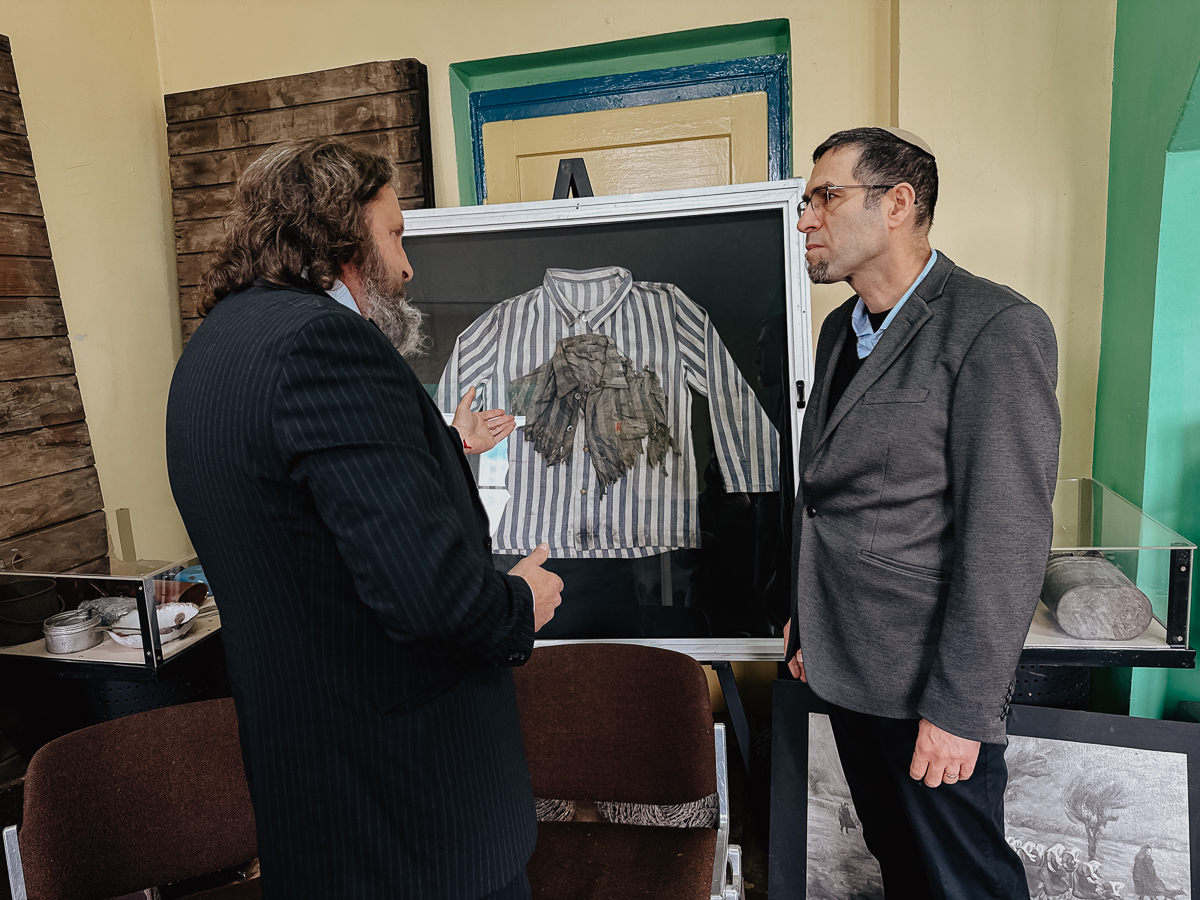
On 10 November, our Foundation was visited by the Ambassador of Israel, His Excellency Mr Ja’akow Finkelstein.
During the meeting, we discussed a number of important issues relating both to historical remembrance connected with KL Auschwitz-Birkenau and to future plans and projects concerning the activities of our Foundation in the field of historical education about the operation of the former German Nazi concentration and extermination camp complex of Auschwitz-Birkenau.
Our Foundation is the second-largest institution, after the Auschwitz-Birkenau State Museum, whose activities are inextricably linked to the vast area of more than 40 square kilometres occupied by the Auschwitz-Birkenau camp complex.
The Memorial Sites under the care of our Foundation include, among others, former Auschwitz subcamps, as well as industrial facilities that are no longer operational, such as our Historic Jawiszowice Coal Mine and the camp kitchen/canteen for SS personnel.
This is an extremely important area of historical education because it presents the Auschwitz camp complex not only through the lens of the Holocaust, extermination and human suffering, but also addresses the question of why the Germans imprisoned such enormous numbers of people in the main camp and its subcamps. The highest recorded number of prisoners across the entire Auschwitz-Birkenau complex exceeded 100,000, registered in the summer of 1944.
This vast post-camp area, known as the “Zone of Interest”, from which the SS derived unimaginable profits through the forced slave labour of prisoners, remains relatively little known to this day. For more than a dozen years, our Foundation has been working gradually but persistently to restore the memory of these places and of the prisoners who perished within this enormous area to historical education.
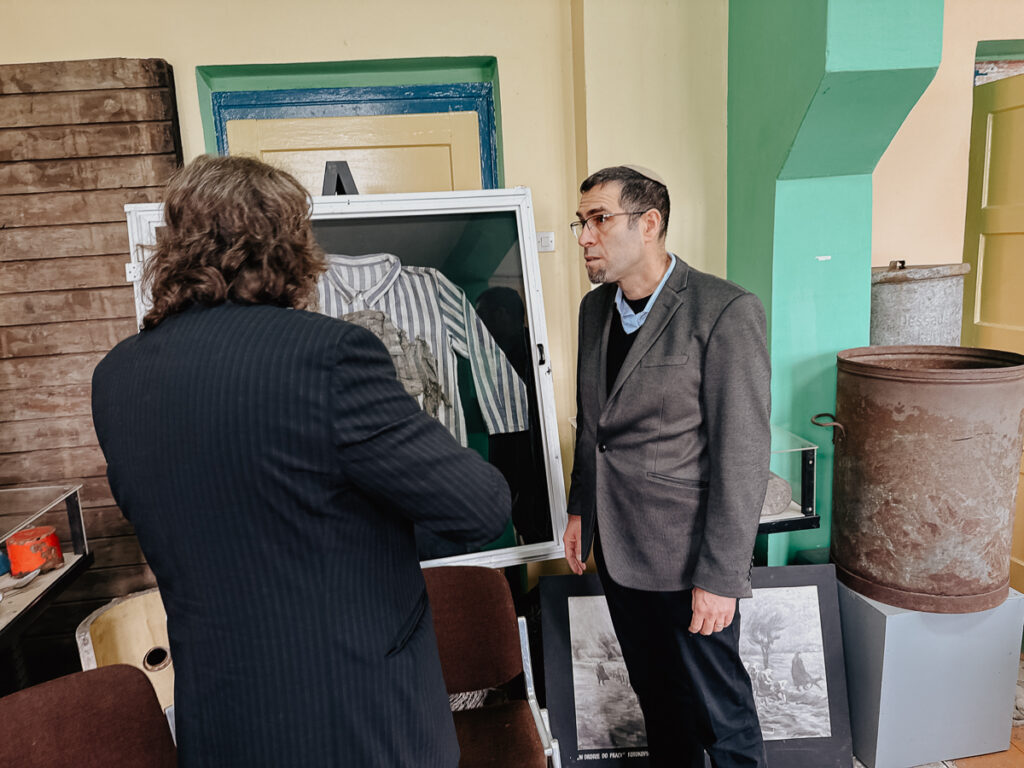
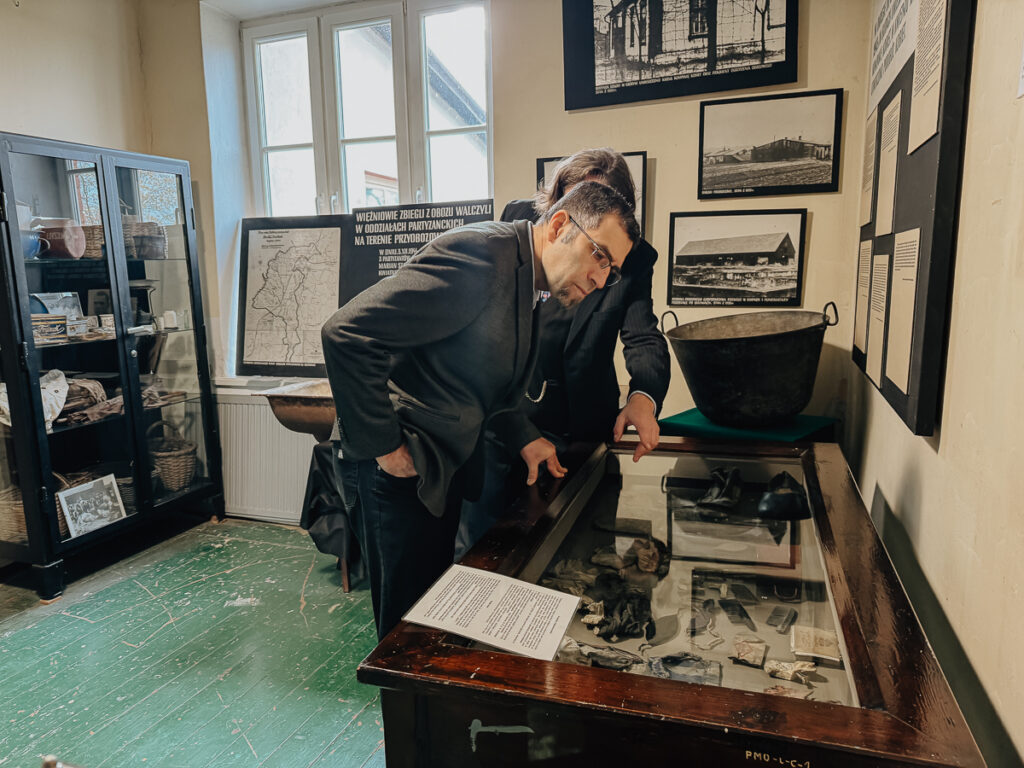
During today’s visit, the Ambassador toured the Auschwitz-Bor/Budy subcamp, known as the Frauen Strafkompanie (Women’s Penal Company) — the only external penal company for women that operated during the existence of the Auschwitz camp.
He learned about its history and visited the exhibition housed in the building where female prisoners were accommodated.
This site holds particular significance in the history of the Auschwitz-Birkenau camp complex. It was here, in the attic of the building, that in October 1942 German female prisoner-functionaries (Kapos), specially brought in from Ravensbrück concentration camp, where they had been imprisoned as criminals, committed an atrocity. According to the camp authorities, these women were considered the appropriate “element” to supervise the female prisoners sent there as punishment — women whose only alleged offence was that the Germans had deemed them hostile to the Third Reich.
Together with SS men guarding the building from the outside, the German female Kapos brutally murdered nearly 90 French Jewish women prisoners. Six German women carried out the massacre, using tools normally employed for agricultural and forestry work, including hoes, mattocks and axes. They literally hacked the French prisoners to pieces and threw their mutilated bodies from the attic windows into the courtyard in front of the building.
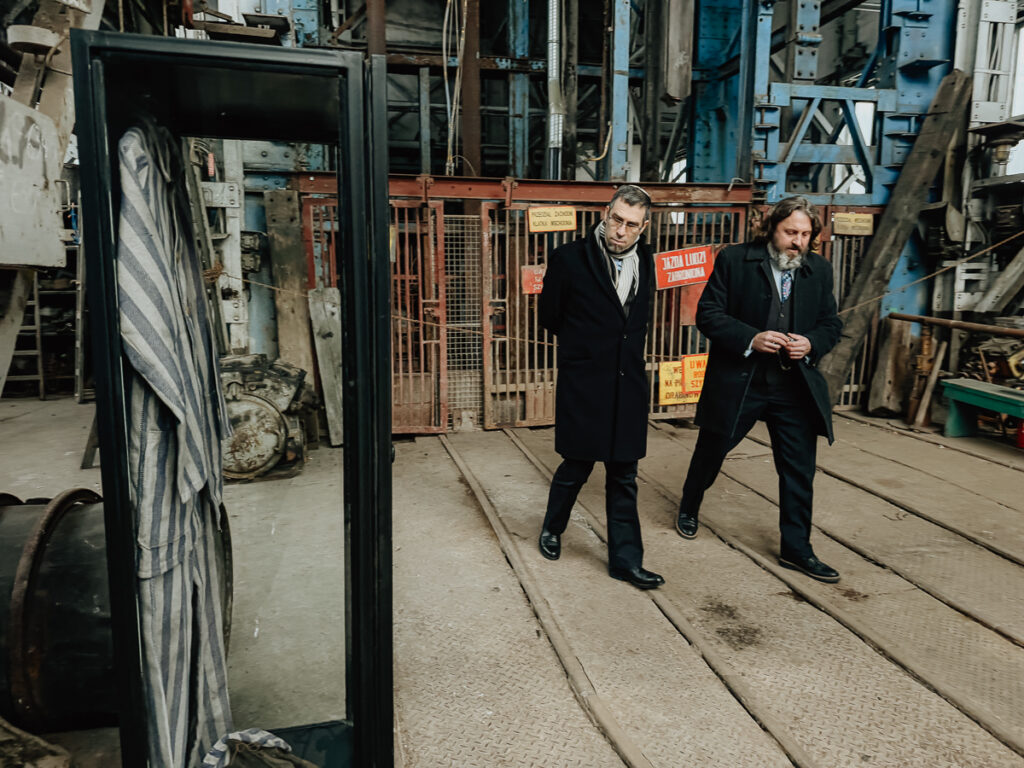
A very important part of today’s meeting was the visit to the Historic Jawiszowice Coal Mine.
Established in 1903, this mine is a site of considerable historical significance. Following Poland’s regaining of independence in 1918, it became the first and only state-owned coal mine in pre-war Poland.
Unfortunately, in 1939, following Germany’s invasion of Poland, the mine was taken over and placed under German administration. In the years that followed, it became the first place where the Germans forced prisoners from Auschwitz concentration camp — and, in subsequent years, prisoners from the newly established Auschwitz-Jawischowitz subcamp — to perform slave labour underground.
It could be said that the mine became a kind of testing ground for this inhumane experiment.
Professional miners are a distinct group of people, accustomed to extremely demanding physical work and possessing considerable endurance. Yet the German camp authorities sent ordinary people, deprived of their freedom and imprisoned in the Auschwitz extermination camp complex, to perform extraordinarily difficult, exhausting and dangerous work underground.
These prisoners were starving, often seriously ill and already deprived of almost all physical strength. They had absolutely no experience of such arduous work. Nevertheless, they were forced to meet coal extraction quotas that exceeded all conceivable human limits.
The Auschwitz-Jawischowitz subcamp and the forced labour performed in the mine constitute one of the darkest and most brutal chapters in the history of the Auschwitz camp complex.
At the municipal cemetery in Brzeszcze stands the first grave of victims of the January 1945 evacuation marches, known as the “Death Marches”, involving prisoners from Auschwitz concentration camp.
People of different faiths are buried together in this single grave, including Christians, Jews and several unidentified prisoners. Their funeral took place on 19 January 1945.
Together with the Ambassador, we observed a moment of silence at this grave, paying tribute both to these victims and to all those who perished in the former German concentration and extermination camps.
This is an extraordinary place — a memorial to the victims of the Auschwitz camp complex, but also a reminder that in the face of extermination, suffering and death, we are all equal. On the gravestone, two religious symbols of exactly the same size are engraved side by side: the Jewish Star of David and the Christian Cross.
Judenrampe — the site where, from early spring 1942 until mid-May 1944, the Germans brought deportation transports from across the territories of Europe then occupied by them.
Jews, Poles, Roma and Sinti, as well as people of other faiths and nationalities, were brought here — all those whom the German Third Reich had condemned to death in the camp.
In 1943, two camp buildings were constructed here using the forced labour of prisoners.
The first was the Kartoffellagerhalle, known as the “Potato Storehouse” — a warehouse for potatoes, swedes, carrots, onions and all other agricultural produce originating from the vast “Zone of Interest” mentioned earlier. These products were obtained by the SS camp authorities through the unpaid forced slave labour of prisoners.
The building is enormous: approximately 250 metres long and consisting of ten identical storage halls, each with an area of 1,000 square metres.
The second, much smaller building was the Krautsilo, known as the “Sauerkraut Factory”. It is, however, unique in several respects.
It too was constructed through the forced slave labour of camp prisoners. Inside, there are three rows of specially tiled fermentation vats, each two metres deep, in which as much as 380 tonnes of cabbage could be fermented at one time.
Naturally, this cabbage was not intended for the needs of the camp itself. It was sold by the SS and transported deep into the German Reich.
Prisoners were forced to prepare fields for cultivation throughout the camp’s “Zone of Interest”, plant and harvest the cabbage once it had matured, and subsequently process it into sauerkraut.
For the German camp authorities, this represented pure profit.
It was precisely at these buildings, situated alongside the railway tracks of what had been a pre-war railway marshalling yard, subsequently adapted by the Germans into a railway unloading ramp for deportation transports, that the Germans conducted selections of newly arrived prisoners for almost three years.
They divided the arrivals into those who were still considered useful to the Third Reich as a source of forced slave labour and those who, in their view, deserved nothing more than immediate death in the gas chambers.
Today, the Ambassador also visited the Judenrampe Memorial Site and the two surviving former camp buildings located there, both of which are under the care of our Foundation.
Despite the fact that today’s visit by Ambassador Ja’akow Finkelstein followed an extremely demanding programme and addressed many difficult historical subjects, we believe that we succeeded in jointly establishing the first foundations for potential future cooperation in the fields of education and the preservation of historical memory.
Importantly, this cooperation may also lead to the creation of a platform for strengthening dialogue between young people from Poland and Israel.
Looking towards the future, we believe that educating young people is the most important shared task before us. They are the ones who will take over from us the responsibility of becoming guardians of historical memory.
Auschwitz-Birkenau Nearby Memorial Sites Foundation